

- Link building campaigns fail because they still chase 2019-era tactics — high DR over topical relevance, low-quality backlinks, and over-optimized exact-match anchors — while Google now weighs relevance and quality far more
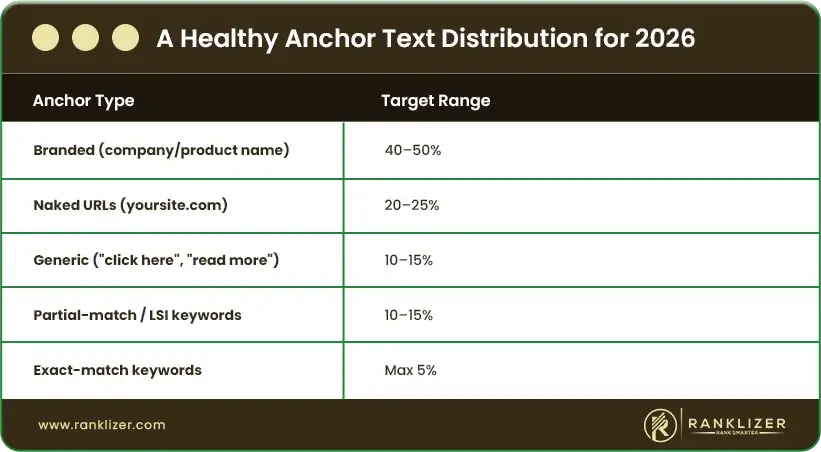
- Healthy anchor distribution is roughly 40-50% branded, 20-25% naked URL, 10-15% generic, 10-15% partial match, and max 5% exact match
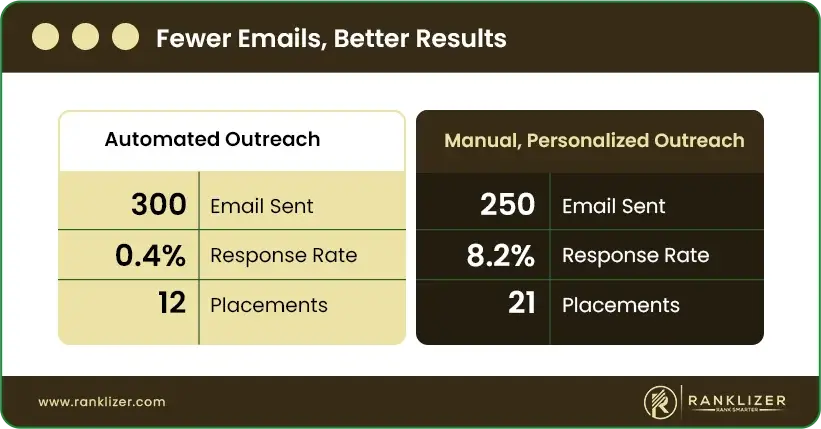
- Manual, personalized outreach beats automation by a wide margin — one case study saw response rates jump from 0.4% to 8.2%
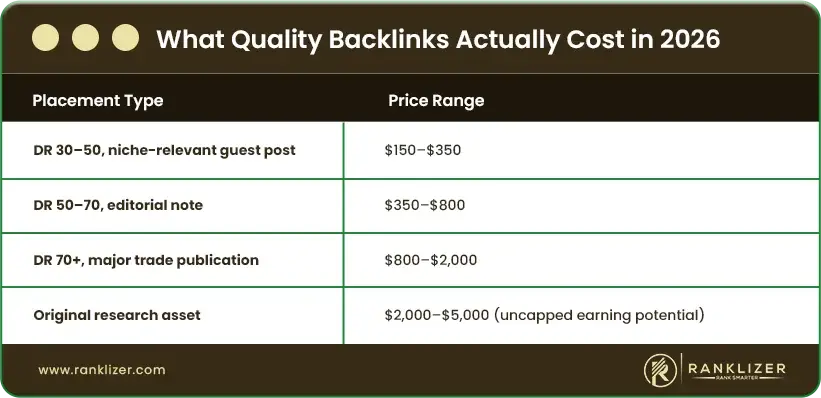
- Realistic 2026 pricing ranges from $150-350 for guest posts to $2,000-5,000 for original research assets — cheap bulk deals like “50 links for $500” signal low-quality, devalued placements
Most backlinks you’re currently paying for are doing absolutely nothing. They don’t fail because SEO is dead or the agency isn’t putting in the work. But because the strategies being sold to you in 2026 were designed for Google in 2019, and that gap is costing you rankings, traffic, and revenue every single month.
There was a version of Google where 200 low-quality links could outrank 20 strong ones. Agencies built entire business models on that reality. Many are still selling that playbook today — just with more visually appealing reports.
In the early days of building Globex Outreach, I experienced this scenario directly. A client wanted 80 links a month. We delivered, and the rankings barely moved. The links were technically from real sites, but they had no topical relationship to the client’s niche. Google had evolved past raw link count and was now evaluating semantic relevance between the linking domain and the target site.
Here’s what most agencies won’t tell you: the problem rarely comes down to effort or budget alone. It comes down to strategy — specifically, strategies that were designed for a version of Google that no longer exists.
Google Has Changed. Most agencies haven’t.
Before we go into the points of failure, it’s important to understand the context we operate in. Google’s algorithm of 2026 isn’t the same system that awarded links that were high in the past five years. Several major changes have fundamentally altered the way backlinks are rated. Spam Brain, Google’s artificial intelligence-powered spam detector, has become dramatically more proficient in detecting links that were created instead of earned. Its Helpful Content System has shifted authority signals towards topical depth and user satisfaction, which means that links from irrelevant context websites have less importance. Updates to the core have often penalized websites with unnatural link profiles, while rewarding those that have a wide range of editorial content and relevant portfolios of backlinks.
The agencies that are still offering “50 links per month at guaranteed DR 40+” aren’t catching up with the current real-world reality. Their playbooks were created for the year 2019. If your campaign isn’t working, the strategy is likely outdated. Not in the abstract, however, it’s not working against the current algorithm.
Here’s exactly what can go wrong.
The 5 Major Reasons Link Building Campaigns Fail
1. Poor Site Selection: Chasing DR Instead of Relevance
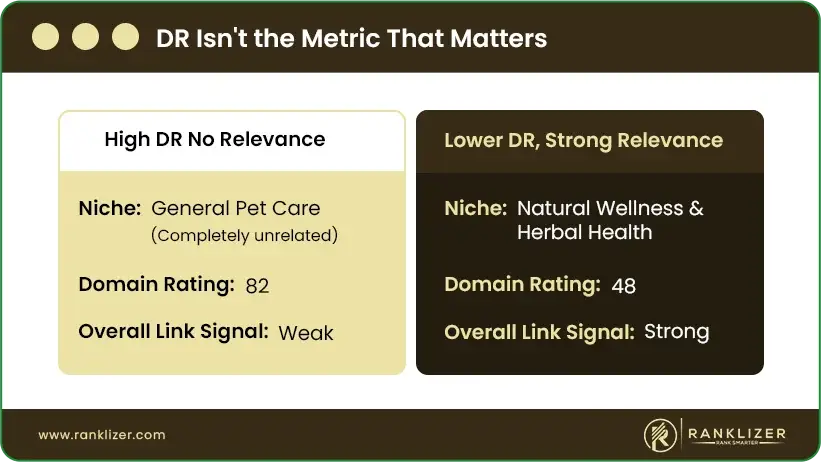
The most frequently made error is to treat Domain Rating (DR) as the sole quality indicator. A DR 70 website in the automotive industry will not significantly impact a B2B SaaS business that sells HR software. Google considers the authority of the topic -Links are more reliable when they are from sources that are relevant to the context.
The real-world scenario: A managing project SaaS platform has accumulated 40 backlinks from blogs with high-DR and more general “write for us” directories. Within 90 days, their desired keywords had moved just two places. The links were authentic; however, they were unrelated.
What works: Build the criteria for selecting a website around three criteria: relevancy to the current topic, editorial quality (real organic traffic and non-sponsored content), and alignment with the audience. DR should be used as a tiebreaker, but not the main selection criterion.
Reject any website that has fewer than 1,000 organic monthly visitors, regardless of DR. Prioritize niche-relevant guest posting over raw volume. Make use of Ahrefs as well as Semrush to confirm the potential prospect’s content before pitching them.
2. Irrelevant Backlinks That Google Ignores
The Google SpamBrain system has become very proficient in identifying bad quality hyperlinks from Link farms, PBNs, or content mill articles. These links aren’t only unable to assist, they can sour the quality of your link profile and alert your domain to review.
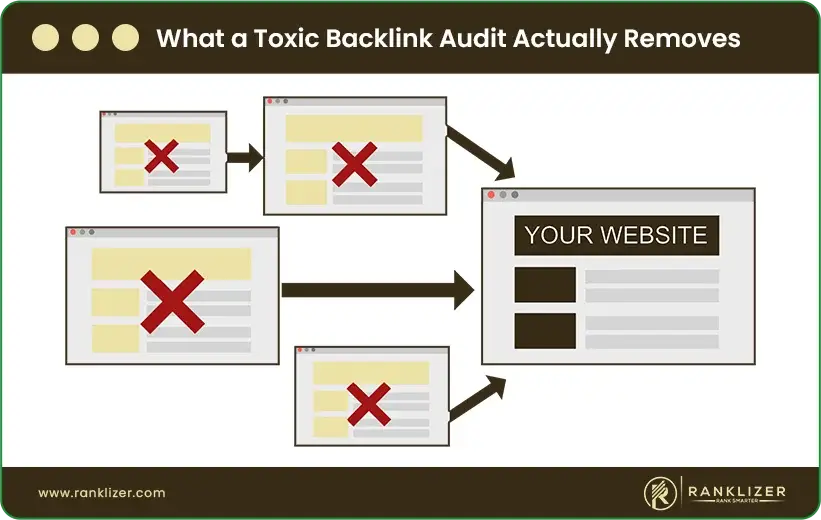
The real-world scenario: An agency for digital marketing conducted a toxic backlink audit that was harmful to an e-commerce customer following a Google core update, which led to an increase in ranking. The agency found that 38 percent of the backlinks were from websites with zero organic traffic, nearly identical templates, and a lack of content. After disavowing the hyperlinks and switching to editorial placements in journals that trade, ranking improved in just two algorithms.
What works: Perform an audit of your link profile before launching every new project. Utilize the Google Search Console’s automated actions report along with other third-party tools. Moving forward, you should incorporate an editorial-first norm in your outreach; every mention should be a logical and non-sponsored reference to relevant content.
3. Over-Optimized Anchor Text: The Penalty Waiting to Happen
If you find that 70 percent of your links contain exact-match keywords such as “best CRM software,” you’re in serious trouble. The Google Penguin algorithm (now integrated into the core) has been specifically designed to identify this. The unnatural anchor text patterns indicate that links were purchased instead of earned.
In the real scenario: A B2B SaaS firm in cybersecurity was hit with a penalty for manual actions after an audit of their link profiles found that more than 70% of guest post anchors featured the exact words “cybersecurity software for enterprises.” Recovery took four months, including the disavowal of content, updates to content, and rebuilding the anchor profile.
What works: A healthy anchor text distribution in 2026 will look like this:
4. No Strategy: Campaigns Without Goals Are Just Noise
Many companies launch link-building because “everyone says you need backlinks” — but they don’t know the pages that they should establish authority on or the way in which acquisition is connected to revenue. This results in a dispersed profile that boosts the authority of domains in the abstract, but doesn’t change the ranking of pages that are targeted.
Linking to creating return on investment for B2B isn’t just about DR improvements on their own. It’s about ranking certain commercial-intent pages to drive a qualified pipeline. When your marketing campaign is creating links to your website, but the bottleneck for conversion is a comparison page for products located on page 3, you’re not investing in the right area.
What works: Begin each campaign by creating a content-link map. Determine your 5-10
most valuable pages according to their commercial purpose and the potential for organic traffic. Create clear KPIs -Keyword movement to target natural traffic that is directed to your linked page and conversion attribution, not just the raw number of backlinks.
5. Spammy Outreach That Burns Your Brand
Automation has enabled sending out thousands of cold emails, and it is nearly impossible to receive responses. Editors get numerous requests for links every day. Templates that show “I came across your amazing article” are identified and removed as quickly as possible.
The real-world scenario: A SaaS link-building agency that runs targeted campaigns that are automated for fintech customers achieved a 0.4 percent response rate for three months, 12 placements from 3000 emails. After converting to manual outreach, using customized pitches and the original data assets, the rate of reply increased to 8.2 percent, which is 21 placements out of just 250 emails: same budget, 75% less emails, almost twice the number of placements.
What works: Manual outreach vs automated link building doesn’t make for an accurate comparison when you consider the quality of the placement as well as brand safety. Include personalization in your workflow.
Make sure to reference the exact article you’re pitching -not just the website. Give a valuable resource that is original information or an expert’s quote, and a tool for free. Keep pitches to less than 150 words. Do it again after 7-10 days, and then proceed to the next step.
A Simple Framework for Campaigns That Actually Work
Achieving success in white-hat link construction in 2026 will be about accuracy, not quantity. Here is the four-phase strategy used by the most successful link-building firms:
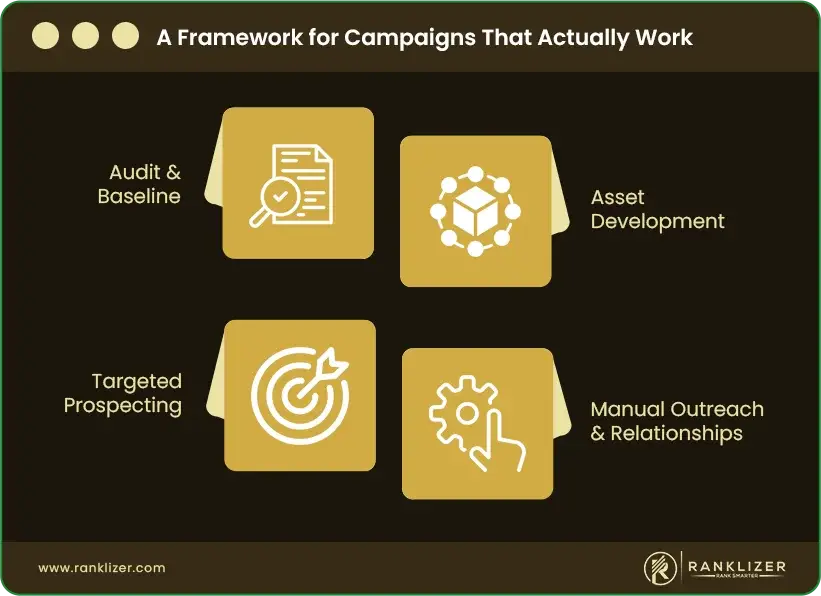
Phase 1: Audit and Baseline:
Perform a full audit of your backlinks before any outreach. Audit for harmful links, identify toxic links, anchor distribution, and map existing authority to your target pages. Don’t build upon a weak foundation.
Phase 2: Development of Assets and Content:
The most effective links are those that link to sites that are worthy of them. Create at the very least one linkable asset, either new research, a benchmark in the industry or free tool or a comprehensive guide, before launching outreach. The pitch changes that you are pitching from “can I have a link” to “here’s something your readers need.”
Phase 3: Targeted Prospecting:
Create an organized list of 100 to 200 prospects per campaign, filtered according to the relevance of the topic, organic traffic, and editorial standards. How to obtain hyperlinks from high DR websites isn’t just about sending a cold email to the most popular domains. It’s about identifying the sites that cover the subject and have previously been linked to similar content.
Phase 4: Manual Outreach and Building Relationships:
Perform with the oversight of a human. Monitor response rates, modify messaging, and create relationships with editors — not just placements. Editors who agree to one piece of content often end up becoming recurring partners that are worth more than a single hyperlink.
What Should You Actually Expect to Pay?
Transparency in pricing is not common in this field. So here’s a real analysis of the price of quality backlinks in 2026:
- DR 30-50, niche-relevant guest post: $150-$350 per placement
- DR 50-70, editorial note: $350-$800 for each spot
- DR 70+, a major trade publication: $800-$2,000 per placement
The original research asset (earns organic linkages over the course of time). It costs between $2,000 and $5,000 to create, without a limit on earnings from placements. Packages offering 50 links a month for just $500 are, invariably, providing the kind of low-quality, algorithmically devalued positions as described in the previous two failure points. The economics of quality editorial do not work at that cost. Before committing to any company or product, you should test a few of their domain names on Ahrefs. Examine organic traffic, topical importance, and quality of the content. The truth will become evident.
Agencies that are offering 50 links at $500 per month typically provide the same placements as described in reasons 1 and 2. The financials don’t allow for the quality of editorial at this cost. If you think the price is too high, try running the domain through Ahrefs before making a decision.
Conclusion: Build Links That Compound
The teams and agencies that are gaining the most from link building don’t have the highest volume of outreach. They’re the ones who treat each link as a long-term investment and choose important websites, anchors that appear natural, and content that is worthy of the right to be placed because it merits it.
If your campaigns don’t move in the rankings, the solution is likely to lie within one of five failing points listed in this article. Make sure the foundation is in place before increasing the amount.
Globex Outreach provides white hat link-building services to SaaS businesses, B2B brands, B2B companies, and marketing agencies. The campaigns are based on strategy, are editorially checked, and are transparent.
Key Takeaways:
- Check your entire backlink profile before launching any new campaign. Clean your profile first.
- Choose prospects based on their relevance to the topic and domain rating.
- Make sure that exact-match anchors are less than 5 percent of your backlink profile
- Every link acquisition endeavor should be mapped to high-value commercial pages.
- It is important to prioritize manual, personal outreach. The difference in ROI versus automation is substantial.
- Create a content asset that you can link to before initiating outreach.
- Include broken link building in your prospecting mix to improve acceptance rates.
- Monitor keyword movement and track the traffic to linked pages, not DR.