
TL;DR Summary
- Content hubs earn links passively by being genuinely useful and well-organized, not by publishing more content
- Build one strong pillar page, focused supporting pages, and clear internal links between them
- Include at least one original asset (research, stats, tools, templates) — these get cited and linked the most
- Keep it optimized for search intent, easy to scan, regularly updated, and promote it without cold outreach
A content hub can help you get backlinks without spending your days cold emailing to editors, asking for placements, etc. When done right, it can be a long-term asset that can bring in search traffic, mentions from other sites, and build authority over time.
It’s not just about creating more content. It’s creating a resource that is organized around a topic that people already need to reference. If your hub is answering important questions that other pages are not, provides something new, and logically links related subtopics, it becomes naturally link-worthy.
What Is a Passive Link-Earning Content Hub
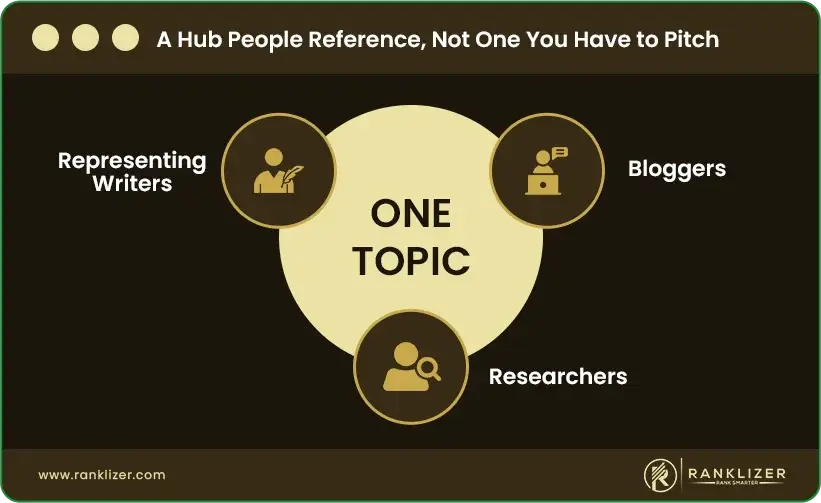
A passive link-earning content hub is a collection of pages that are focused on a single topic and are intended to be linked to because they are useful, original, and discoverable. You don’t have to do outreach; you just create content that other writers, bloggers, journalists and marketers want to cite.
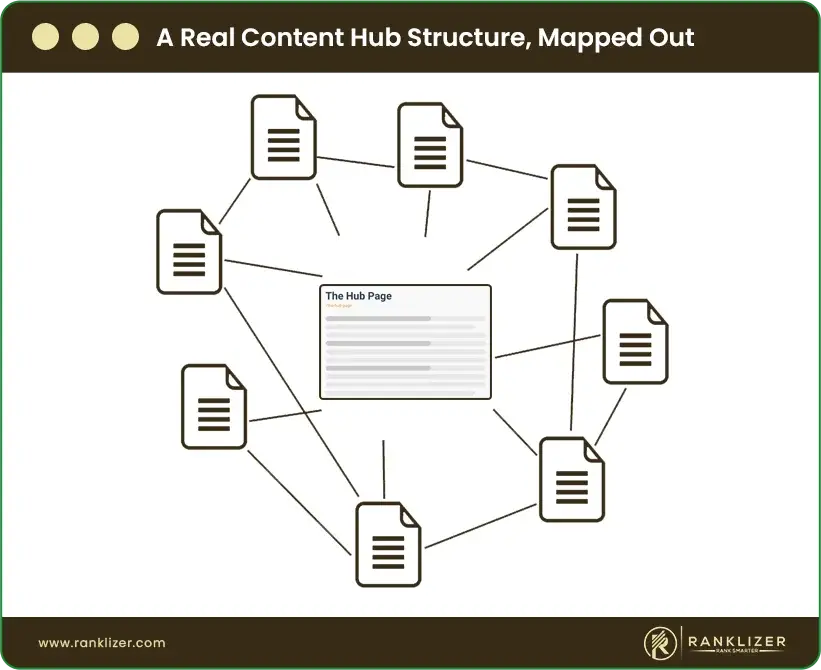
Typically, this kind of hub will have one pillar page and several articles that will discuss related angles in detail. As time goes on, the hub establishes topical authority, enhances internal linking, and boosts the likelihood of your pages ranking, being referenced, and acquiring backlinks naturally.
Content Hubs are worth linking because they serve as a hub for content.
People link to content that helps them explain, compare, or prove something. All three can be supported by a strong content hub.
A well-constructed hub is link-worthy because it:
- Structures a topic better than a series of stand-alone articles.
- Makes research easier for writers and readers.
- Provides original information, clear structure, or helpful detail.
- Answers questions about covers in a single source.
- Demonstrates knowledge to search engines and to human readers.
The best passive links are typically from content that saves people time. When your hub is the fastest way to learn about a subject, it is naturally citeable.
Select the appropriate topic.
Not all topics are suitable for passive link building. Some niches are too saturated, too commercial, or too general to be noticed. The most successful hub topics are those that are relevant, have search demand and have a potential for citations.
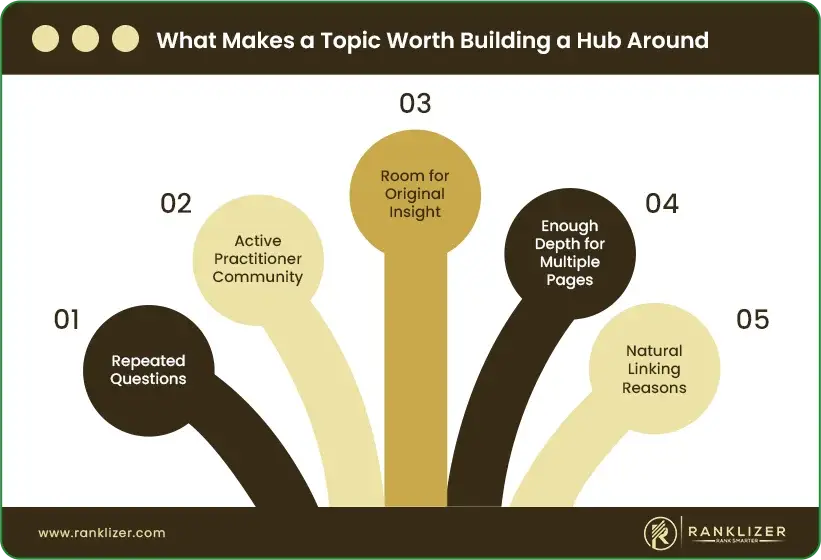
Search for topics that have:
- Questions that are repeated and related subtopics.
- A group of bloggers, journalists, practitioners or researchers.
- Room for unique insights, examples, statistics, or frameworks.
- Sufficient depth to accommodate several supporting pages.
- Other sites that might link to the material for natural reasons.
Good hub topics will contain:
- Industry benchmarks.
- Frameworks and processes.
- Tool comparisons.
- Introduction to education of complex subjects.
- Topics that are evergreen and include how it works.
- Trends that are emerging with real search interest.
For instance, a hub about “content hub SEO” might have pages about architecture, keyword mapping, internal linking, pillar pages, topical authority, and examples. A hub on “remote team management” might include hiring, onboarding, communication, productivity, and async workflows.
Build Around a Pillar Page
Your hub revolves around the pillar page. It should provide a general overview of the topic that is useful and direct readers to more detailed supporting pages. Consider it as the primary reference page that categorizes the subject for the users and search engines.
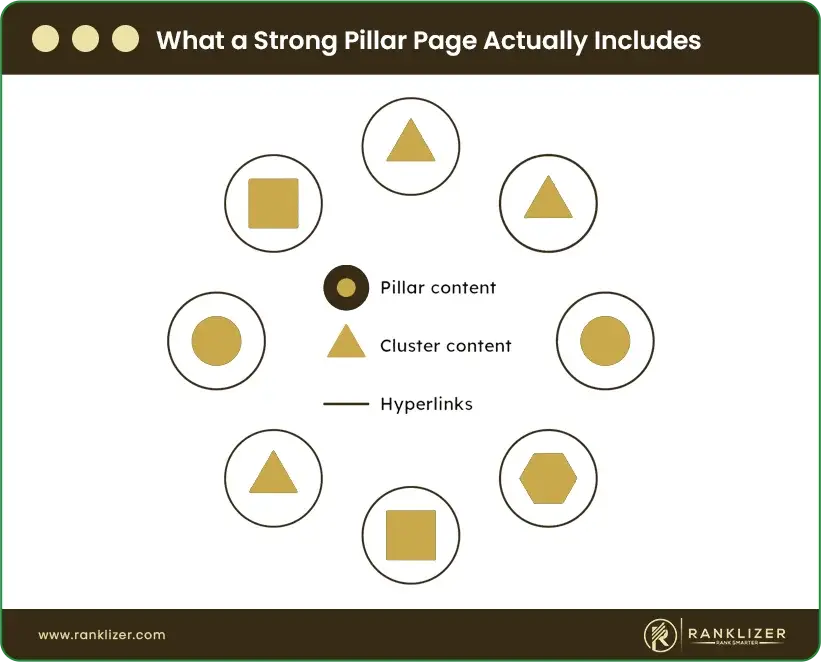
A good pillar page should:
- Be specific about the subject.
- Provide answers to the most critical beginner questions.
- Provide links to relevant supporting articles.
- Use a clean structure with easy-to-scan headings.
- Don’t go into too much detail on each subtopic.
The pillar page shouldn’t be fluffy or weak. It should be the best beginning point on the topic. When readers leave, they should know where to go next, and search engines should know that the page is at the heart of a topical cluster.
Map Supporting Content
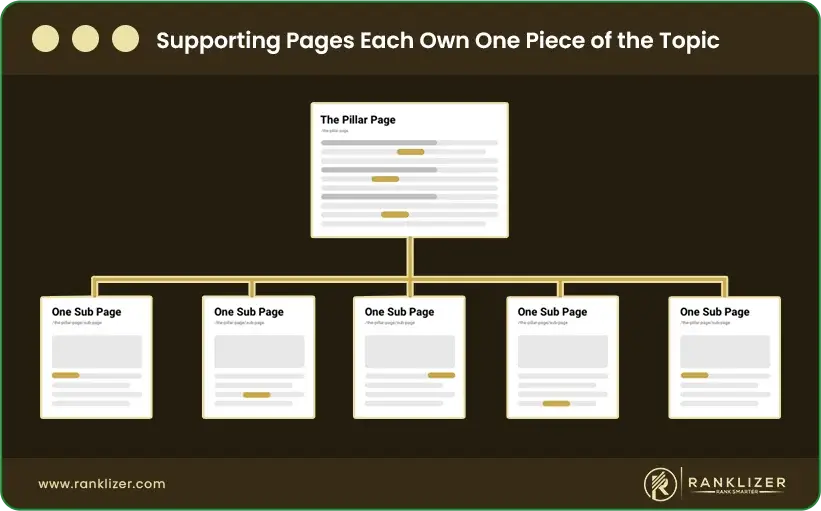
Rankings and links are done by supporting pages. These articles should be focused on specific questions, comparisons, problems, and subtopics that can easily be related back to the pillar page.
A good supporting page should:
- Target a single search intent.
- Discuss one aspect of the topic in detail.
- Link back to the pillar page.
- Include links to related supporting pages as appropriate.
- Provide substance, not rehash.
For instance, if your hub is on passive link building, supporting pages might be:
- What makes content linkable.
- Data-driven content ideas.
- The best types of content to link back to.
- Creating Statistics pages.
- How to write citation-worthy guides.
- Topical authority internal linking strategies.
Each page should stand alone, but also reinforce the hub as a whole.
Use Link-Worthy Content Formats
Certain formats are more link-friendly than others. If you want to acquire passive links, create at least some of your hubs on topics that people already link to.
High-link-potential formats include:
- Original research and surveys.
- Statistics pages.
- Industry benchmarks.
- Definitive guides.
- Templates and swipe files.
- Free tools and calculators.
- Glossaries.
- Case studies that have measurable results.
- Graphic organizers and diagrams.
- Clear comparison pages with criteria.
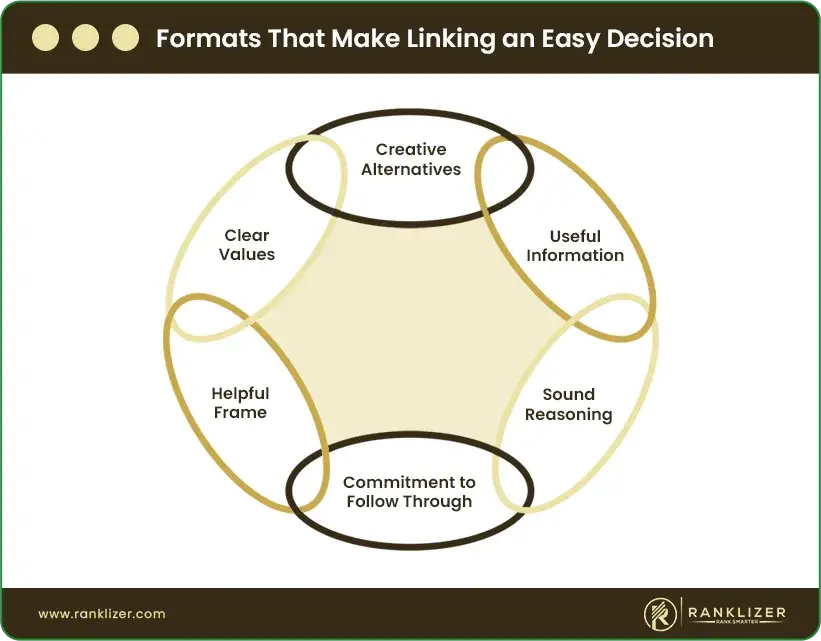
These formats work because they make the linking decision easier. A writer looking for a stat, a marketer looking for a framework, or a founder looking for an example is more likely to link to a page that provides them with what they need.
If possible, add at least one original asset to the hub. Unique data, proprietary methods or first-hand examples have a much better chance of securing links than generic advice.
Originality + Earn Links
If your content is similar to what’s out there on the web, it’s not going to get links passively. Originality does not necessarily imply pioneering work. It may also refer to improved structure, more clear writing, more powerful examples, or a more focused point of view.
Ways to make your hub more original:
- Publish your own data.
- Use real-life examples or case studies.
- Add practical templates.
- Convert complex ideas into simple visuals.
- Create reusable frameworks.
- Make comparisons based on personal criteria.
- Record learning from actual implementation.
Originality provides other sites a motive to link to you rather than a rival. It also helps to make your content more memorable, which can lead to repeat visits and branded search over time.
Optimize for Search Intent
Passive links typically begin with organic visibility. Without ranking and being found, your pages won’t receive many natural links. This is why search intent is important.
Every page in the hub should have one main purpose:
- Informational purpose for educational guides.
- Comparative intent for “best”, “vs” and “alternatives” pages.
- Brands navigational intent.
- Transactional intent for template, tool or service.
- Conduct research for statistics, trends and benchmarks.
Before you start writing, check out the top ranking pages for the keyword and ask yourself:
- Which format is the most prevalent in the results?
- What is the level of detail in the top pages?
- What is missing?
- What do readers probably want next?
Then make something that does a better job of meeting the intent than the current results. Content that matches intent well is rewarded by search engines and that visibility is what helps content get passive links.
Strong Internal Linking
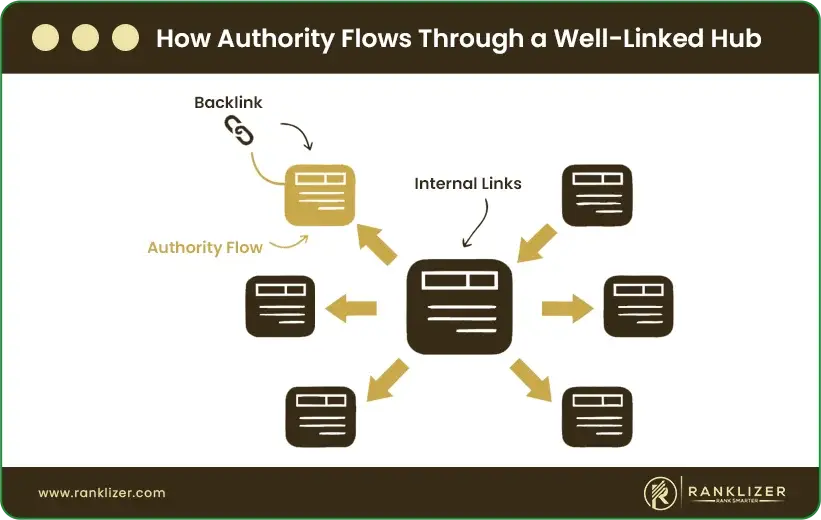
One of the most crucial components of a content hub is internal linking. It assists users to navigate the cluster naturally and assists search engines to understand the relationship between the pages.
A good internal linking structure should:
- Connect the pillar page to each supporting page.
- Link supporting pages back to the pillar page.
- Link related supporting pages across where appropriate.
- Descriptive anchor text.
- Do not make links that are not necessary for the reader.
This structure gives the hub a coherent and authoritative feel. It also distributes authority across the cluster, and a page that begins to attract links can help boost the rest of the hub.
Design for Citability
A page that is easy to quote, cite or reference is more likely to get passive links. That means you need to create content that is not only readable, but also scannable and extractable.
To increase the citability of pages:
- Keep definitions short and simple.
- Include important points at the top.
- Include statistic callouts.
- Compare using tables.
- Include bullet lists for easy scanning.
- Write descriptive subheads.
- Don’t put key information in long paragraphs.
Often people link to the specific part that answers their question. The easier it is to find, the more likely your page will be mentioned.
Create One Anchor Asset
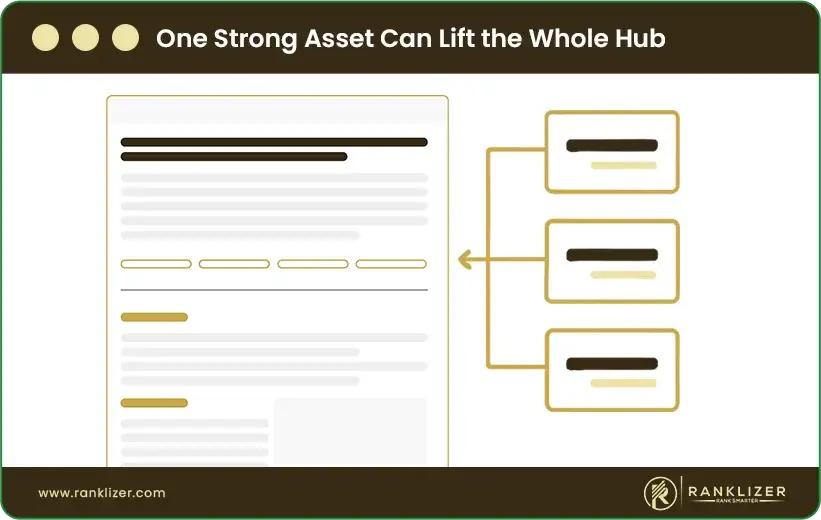
Each strong hub should have one or more anchor assets. This is the page that will likely get links on its own as it has great value.
An anchor asset can be:
- A statistics roundup.
- A data study.
- A free calculator.
- A template library.
- A definitive guide.
- A comprehensive list of resources.
- An interactive tool.
The anchor asset should be something that people in your niche would naturally bookmark, cite, or reference in articles and reports. If that one asset is supported by the rest of the hub, the whole cluster is more link-worthy.
Write for depth, not volume.
A passive link hub is not created by publishing dozens of weak pages. It’s constructed by publishing the proper pages at the proper depth.
Aim for:
- A single pillar page.
- Some supporting articles with a focus.
- One or more original or unique asset(s).
- Well-defined topical map.
- A uniform publication format.
10 great pages are better than 50 mediocre pages. When it comes to link building without outreach, it’s not about volume, it’s about depth, usefulness, and structure.
Keep the Hub up to date regularly.
Passive links are easier to get from content that remains up to date. When your hub is outdated, other sites will turn to fresher sources.
Update the hub by:
- Refreshing statistics.
- Growing areas that work well.
- Removing outdated examples.
- Adding new subtopics.
- Over time, improving internal linking.
- Adjusting titles and intros to reflect changes in search behaviour.
Updates also indicate that the content is kept up to date, which aids in trust and rankings. A living hub is likely to work better than a static hub, as it will keep responding to changing questions.
Promote Without Outreach
While the objective is passive link acquisition, visibility is still required. “Without outreach” does not mean “without distribution.” It implies that you’re not going after links individually.
Other non-outreach distribution methods are useful and include:
- Publishing on your own blog and site.
- Sharing via your newsletter.
- Posting in appropriate communities.
- Reusing social media information.
- Submitting tools or resources to directories.
- Adding the hub to resource pages that you control.
- Linking from older high traffic pages internally.
These techniques boost discoverability, and therefore the chances that others will discover, use and link to your content later.
Measure Link Potential
What you don’t measure, you can’t improve. Monitor which pages in the hub are getting attention and which ones are getting links, impressions or citations.
Useful metrics include:
- Referring domains.
- Organic impressions.
- Organic clicks.
- Time on page.
- Scroll depth.
- Internal click flow.
- Branded searches.
- If applicable, cite in AI responses or summaries.
Look for patterns. Many times, the pages that get the most links are not the ones you would have thought. This will give you an idea of what content in your niche is most citeable.
Example Hub Structure
A straightforward design for a content hub that will attract passive backlinks:
Pillar page: How to Create a Content Hub that Wins Links
Supporting pages:
- What is a Content Hub?
- Content Hub SEO Architecture
- Best Content Formats for Backlinks
- How to Create Linkable Assets
- How to create a Statistics Page
- Internal Linking Best Practices
- Content Hub Examples
- To Update Evergreen Content, follow the steps below:
- How to Make Content More Citeable
Each page has a specific function, but they all form a whole topical ecosystem. That’s what makes the hub better than a random collection of blog posts.
Some of the most frequent errors to avoid:
Many content hubs are not successful because they are strategic on the surface, but not successful enough to gain links.
Avoid these mistakes:
- Creating thin pages that have little value.
- Attempting to discuss too many unrelated topics.
- Weak internal linking.
- General information that has been posted thousands of times.
- No obvious pillar page.
- No anchor asset.
- No update process.
- Putting links ahead of usefulness.
Sustainable links will not be given if the hub is not truly useful. Passive link building still needs quality, but it’s just that instead of outreach, it’s usefulness and discoverability.
Final Thoughts
A content hub can certainly get links passively, but only if it’s created like a real asset. It’s a simple formula: select a topic that has the potential to be cited, build a strong pillar page, publish deep supporting content, add something original, and organize everything for clarity and discoverability.
Once you do that well, the hub begins to act like a compounding system. Search traffic leads to visibility, visibility leads to citations, citations lead to authority, and authority leads to more links. That’s how to create a content hub that attracts links without outreach.
FAQ
What is a passive link building content hub?
A passive link building content hub is a collection of pages on a single topic that naturally attract backlinks due to its usefulness, originality, and search visibility.
Is it possible to get backlinks without outreach?
Yes, but not by chance. You must have something that people want to quote, whether it’s original research, statistics pages, tools, frameworks, or very useful guides.
What type of content earns the most passive links?
Passive links are most often given to original research, statistics, templates, tools, and definitive guides, which are easy to reference and difficult to replace.
How many pages should a content hub have?
There’s no set number, but a good hub will typically have one pillar page and several supporting pages that go into detail about the most important subtopics.
How long does it take for a content hub to get links?
This depends on the topic, competition and quality of the content. Some pages will get links in months, others will take longer as search visibility and authority increase.
If I’m not doing outreach, do I still need promotion?
Yes. While manual link outreach isn’t necessary, discovery via SEO, social distribution, newsletters, communities and internal links is.
What is the greatest sin people commit?
The worst thing you can do is write general content that doesn’t provide enough value to be cited. Passive links are links that are derived from content that is worthy of linking.