

TL;DR Summary
- AI Overviews only require normal indexing and snippet eligibility, so fix noindex, robots.txt, nosnippet, and JavaScript issues first.
- Google pulls answers from related sub-questions (fan-out), so cover them with answer-first, concise passages, lists, tables, and evidence.
- Brand mentions, real expertise, fresh updates, and presence on YouTube, Reddit, and LinkedIn matter more than schema, which doesn’t directly earn citations.
- Prioritize informational pages, track citation rate and share of voice, and treat citations as brand exposure rather than a traffic source.
Getting your content into Google’s AI Overviews starts with something unglamorous. Google has to be able to index the page and pull a snippet from it. Once that’s sorted, the real work begins: building strong E-E-A-T into your content and getting your brand talked about beyond your own website.
None of that sounds radical, and in a sense it isn’t. What has changed is how Google selects its sources, and the advice out there hasn’t really adapted. Older guides are written with assumptions that recent research has turned on its head, and people often quote figures that contradict each other.
Let’s address that. Below you will find the signals that these summaries are responding to, how they choose what to cite, a description of the process to adapt your pages, and a sample along with rewrites.
What does the shift to blended answers mean for you as an SEO? Rather than competing to occupy the coveted position #1 spot, you’re now striving to be one of the many answers blended within a summary.
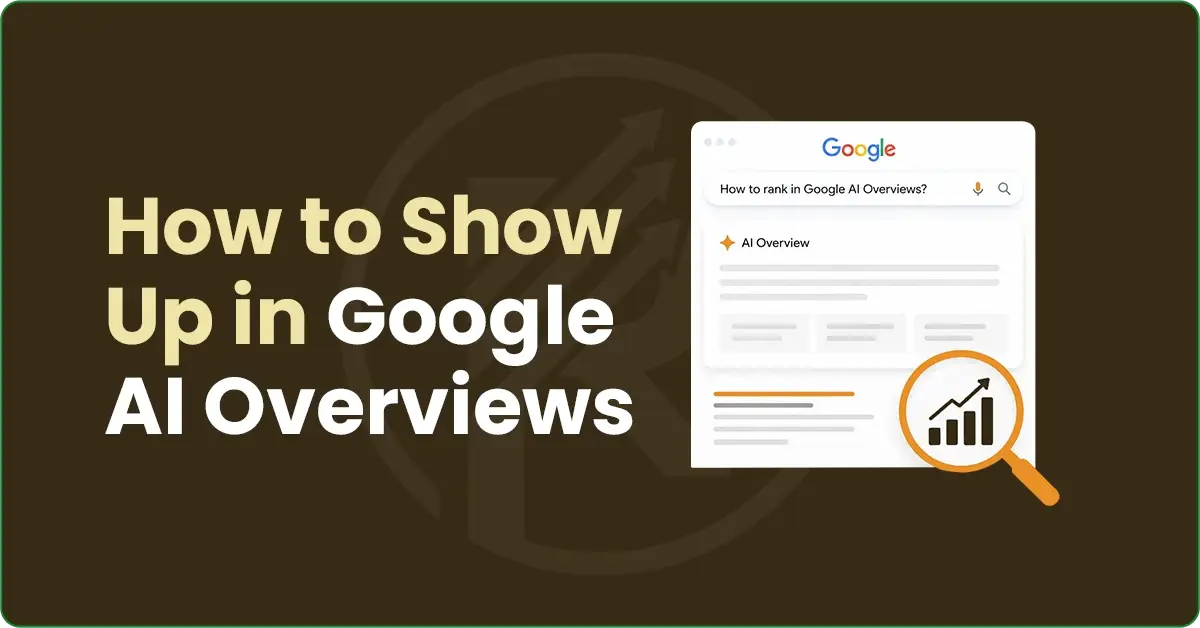
What Are AI Overviews, and Who Do They Cite?
When a user types in a query, Google doesn’t limit itself to those exact words. Google’s documentation describes the system launching a batch of related searches across several subtopics while it assembles its response. Google calls this process query fan-out.
Take the search “best CRM for small business.” Behind the scenes, Google might look up feature comparisons, how hard each tool is to set up, which email tools it integrates with, and pricing for small teams, to name a few. It can then display a summary built from all of those searches as the answer.
Understanding this process opens up a new way of thinking about SEO. Even if you don’t own the main keyword, your page can still earn a place by answering one of the subsidiary questions better than the competition.
AI Mode vs. AI Overviews
AI Mode and AI Overviews are both Google’s attempts to give users better answers; however, they differ in execution and effect. AI Mode is a separate tab that the user has to open.
AI Overviews, on the other hand, are built into the standard results page, are relatively short, and leave the organic listings in place below them.
The two overlap significantly in subject matter. Generally, AI Overviews reward concise passages, while AI Mode rewards longer, more comprehensive coverage.
Do You Always Need a Top Ranking to Appear in AI Overviews?
Not always. A strong organic ranking still helps a great deal, but it’s no longer a guarantee. When AI Overviews first launched, anyone who said that being cited in one meant you’d made it to page one was probably right.
The first few studies found that cited pages nearly always ranked on the first page. More recent research shows a growing share of citations coming from pages buried deeper in the results. Some citations even come from pages that don’t really rank for the main query at all.
Two other points are worth noting. First, tracking tools have improved dramatically, so part of the change may simply be sharper measurement. Second, fan-out explains much of the rest.
A page can rank for, and be quoted for, a related sub-question even when it doesn’t rank for the broader, more widely searched question.
In my opinion, traditional SEO and keyword research will always be a foundational part of your strategy. However, ignoring recent advances and trends in the field would also be unwise.
How Often Do AI Overviews Appear?
It depends on the query, the industry, and who’s doing the counting. Published estimates vary widely, and that range usually says more about the research methods than about Google.
There are a few main reasons for the disagreement. Desktop and mobile results differ, so the device a study uses can skew the numbers. The keyword set matters too: studies that include many shopping-related (product) searches find AI Overviews far less often.
Geography also plays a part. Google has steadily rolled the feature out to more countries, so some differences between studies may simply reflect where and when it was available. And in some cases, the data may capture an anomaly rather than a typical pattern.
Variation by Intent and Industry
In general, the more studies are published, the clearer the overall trends become.
| Kind of query | How often AI Overviews tend to appear |
|---|---|
| Question-style searches | Very often |
| Informational, long-tail searches | Very often |
| B2B technology topics | Frequently |
| Health and wellness topics | Frequently |
| Commercial and transactional searches | Seldom |
| Local and navigational searches | Seldom |
Citation habits also differ by industry. In some industries, Google mostly cites the top-ranking pages; in others, it strays further from the pack.
Gauging Exposure on Your Own Keywords
Industry averages won’t tell you much about your own keywords, but measuring your own exposure is easy. Put your keywords in a spreadsheet and label each one by intent: informational, commercial, transactional, or local. Then use Ahrefs or Semrush to filter for keywords that trigger an AI Overview.
Next, check a few by hand in a private window to make sure the results aren’t skewed. Finally, calculate how often AI Overviews appear for each intent group.
The Signals That Matter
Instead of chasing splashy statistics, focus on the findings that matter most.
According to Google, there’s only one hard requirement for inclusion: standard Search eligibility. Everything else comes from industry research and first-hand observation, so treat those signals as strong tendencies rather than rules.
Indexing and Snippet Eligibility
According to Google, nothing beyond ordinary Search eligibility is required to appear in AI features. That means the page needs to be indexed, and Google needs to be allowed to show a snippet from it.
That also means a few technical slip-ups become deal breakers. A stray noindex tag left over from a site redesign will block you. So will overly broad robots.txt rules or nosnippet tags.
And so will JavaScript that loads your most important content in a way Google can’t read. Before you edit another line of copy, check your pages with the URL Inspection tool in Google Search Console.
Extractable Passages
Google’s AI works with individual passages rather than whole pages. That means a single strong passage can be cited even if the rest of the page is weaker. Research hasn’t found a clear link between a page’s total word count and AI citations.
In fact, Google’s own guidance for AI search suggests that passages should be concise yet informative.
Breadth of Related Questions
Covering the full range of related questions gives Google more ways to use your content for its sub-questions. A single detailed page supported by a few related pages often performs better than a series of thin pages covering the same question.
Brand Mentions and Entity Strength
Industry reports suggest that while backlinks support visibility for larger entities, brand mentions are a stronger indicator of AI visibility. Unlinked mentions in trade publications, podcasts, and forums also appear to influence AI visibility.
Google relies on consistent entity details, such as an Organization profile with sameAs links, to connect those scattered mentions back to you.
Freshness
On fast-changing topics, AI Overviews favour more recent material. A visible “last updated” date can help your page, but only if it reflects a substantive change rather than a minor copy edit.
Visibility Beyond Your Website
The sources behind these summaries often sit outside your website. Citation research suggests that Google most frequently cites YouTube, Reddit, Quora, and LinkedIn. Turning a key section of your post into a YouTube video or a LinkedIn post gives Google another source of yours to cite.
How to Optimize Content for AI Overviews, Step by Step
This process is primarily outward-focused. Begin with a single priority page, then expand to others as you get comfortable with the process.
Study Current AI Overviews
Search for your target phrase in a private window to see what Google already shows and what you’re competing against. Note which sources earn a mention. What’s the general structure of the answer?
Is it a list? A definition? Then pay the most attention to what’s missing, because that gap is your opportunity.
Test a couple of different versions of the query and look at the different sources Google pulls in.
Map the Fan-out Questions
Next, map the sub-questions Google is likely answering behind the scenes. Good places to find them include Google’s People Also Ask feature, AlsoAsked, sub-questions suggested by AI tools, and questions people in your industry ask on Reddit.
Here’s the plan for this article, based on the query “How to optimize for Google AI Overviews”:
| Probable sub-question | Section that answers it | Format |
|---|---|---|
| What are AI Overviews? | Definition | An “X is Y” sentence |
| Do I need a top ranking? | Ranking | Explanation |
| How common are they? | Frequency | Table |
| Does schema help? | Schema | Direct answer |
| How do I track citations? | Tracking | Metrics and tools |
| Which pages deserve priority? | Page selection | Decision table |
Turning sub-questions into headings gives Google multiple places to find an answer.
Answer First
Put the answer at the start of the paragraph, with supporting detail after it. Here’s an example.
The original:
When it comes to schema, there are lots of opinions within the SEO community, and it’s worth considering carefully because it can affect things in a variety of ways.
The rewrite:
Schema markup doesn’t directly earn citations in AI Overviews. Google says no special markup is required to appear in AI features, and no study has shown a citation boost from adding it.
It’s still worth using Article, Organization, and Person markup, because it helps Google connect your content to its author and your brand.
The rewrite above does three things: it starts with the answer, it makes clear what it’s about, and it states something a reader can check. It also works perfectly as a standalone explanation. That’s exactly the job an AI Overview needs a passage to do.
Definitions and short, direct answers are the easiest formats to get right. Notice that the rewrite uses short sentences, each with its main point up front.
Use Lists, Tables, and Evidence
Pages in the top three results commonly feature comparison tables and lists. AI Overviews lean heavily on processes and options, which suit lists and bullets.
Research on generative engine optimization found that adding evidence of any kind increases the chance of being cited, and concrete evidence, such as statistics, increases it even more. Even an internal survey or a rough benchmark can help.
Show Real Expertise
Add a real byline that links to an author page listing your credentials, published work, and speaking engagements. Demonstrate hands-on experience with client results, screenshots, tests, or case studies. When you make a claim, cite the original source and provide evidence.
Because Google presents these summaries in its own voice, trust signals carry more weight here than elsewhere.
Get People Talking About You
Mentions matter as much as links, and perhaps more.
They come from activities like publishing original research, offering expert commentary to trade publications, appearing on podcasts and webinars, contributing to discussions on Reddit and Quora, and creating short, clear, accurate YouTube videos that explain your research.
Building this kind of reputation takes patience. Blatantly self-promotional posts break the rules of most community platforms and can get you banned.
Update Your Priority Pages
Keep returning to your priority pages. Refresh stale examples, and check the live AI Overview for facts you need to update. Only change the “last updated” date when the content has genuinely changed.
Edits can take time to be reflected in results, so give each change a few weeks before expecting significant movement.
The Role of Schema Markup in AI Overviews
Schema.org markup adds structured data to your pages to help Google understand what they’re about, but there’s no evidence that it wins citations in AI Overviews. Many resources online overstate its importance. Adding it isn’t a bad idea, but there’s no evidence it influences AI Overview citations.
Google has stated that it doesn’t require any special markup or file types for a page to appear in AI features, and there’s no clear evidence that Google favours sites in AI citations based on their markup.
HowTo rich results have been retired, and FAQ rich results are now limited to a select group of authoritative websites, so much of the advice claiming HowTo and FAQ markup boost visibility is outdated.
That said, correct structured data is still worth adding. Article and BlogPosting markup identify a page’s author and publication date. Organization and Person markup, along with sameAs links, help with entity recognition.
FAQPage markup does no harm as long as it matches the text on the page.
Treat markup as good practice: keep your entity details consistent and make sure the markup matches the content on your pages.
Which Pages Should (and Shouldn’t) Target AI Overviews?
Spend your time on informational pages that earn citations and build awareness, and let your transactional pages compete the conventional way. Focusing on one goal yields better results than spreading yourself thin.
| Page type | Likelihood of an AI Overview | Suggested priority |
|---|---|---|
| How-to guides and explainers | High | Top priority |
| Definitions and glossary entries | High | Moderate, since they earn citations but few clicks |
| Comparisons and “best X for Y” pages | Moderate and rising | High, especially in B2B |
| Product and pricing pages | Low | Stick with traditional SEO and CRO |
| Local and navigational pages | Low | Focus on Google Business Profile |
Be realistic about traffic, and consider what the research on AI Overviews shows. Click-through rates tend to drop when an AI Overview appears, because searchers feel the summary has already answered their question.
As a result, a citation usually works better as brand exposure than as a direct traffic driver. That exposure tends to show up later as branded searches and direct visits, so focus on those signals more than on clicks.
How to Track AI Overview Visibility
Alongside Search Console, you’ll need a dedicated monitoring tool, because Search Console doesn’t separate AI Overview data from the rest.
What Search Console Reveals and What It Hides
Google has confirmed that traffic from AI features is included in your overall search data in Search Console, but there are some quirks. AI Overview clicks are combined with regular organic clicks, and both are reported under the “Web” search type.
A page that appears both in an AI Overview and in the organic listings below it can generate more impressions than clicks for the same search, which can pull your average CTR down.
Also, every link in an AI Overview is assigned the same position, the position of the AI Overview itself, rather than its specific place within the summary.
Citation Rate and Share of Voice
Two metrics help fill the gaps: citation rate and share of voice. Citation rate is how often your domain appears in AI Overviews for the queries you track. Share of voice is your share of the total citations for those queries, compared with your competitors.
Several tools now track both metrics, including Semrush’s AI Visibility Toolkit, Ahrefs’ Brand Radar, Otterly.ai, and Thruuu.
A couple of other signals complete the picture. First, add “Google AI Overview” as an option to your “How did you hear about us?” form. Second, watch your branded search volume as your citations start to increase.
What Happens if an AI Overview Gets Your Brand Wrong?
You can’t edit the overview itself, so you have to fix the sources it draws on. The cause is usually vague wording or outdated pages.
First, take a screenshot showing the query, the date, and your location. Next, use the feedback option on the AI Overview to explain the error. Then track down the source it cited and correct it if it’s yours, rewriting vague sentences and outdated passages.
Finally, if the source belongs to a third party, contact them politely with evidence and ask for a correction.
Some site owners ask whether they can opt out of AI Overviews entirely. The options are limited. Adding a nosnippet tag can keep a page’s content out of AI Overviews, but it also removes your preview text from regular search results.
Blocking Google-Extended keeps your content from being used to train Gemini models, but it does not affect AI Overviews. Google has signalled that it’s exploring more controls for site owners, but check its latest documentation for what’s currently available.
Final Thoughts
Being included in AI Overviews is less about beating a new algorithm and more about organising best answers to make them easy to find. Your rankings will get you in the door. Passage quality and breadth of coverage will determine if Google actually quotes you.
You can start small. Pick an informational page that performs well, and identify the questions related to the topic. Then rewrite the sections of that page so the answers are placed at the beginning.
Track citations for a few weeks and learn what changed. Replicate the process for the other pages.